Projects supported by the REAL FLC
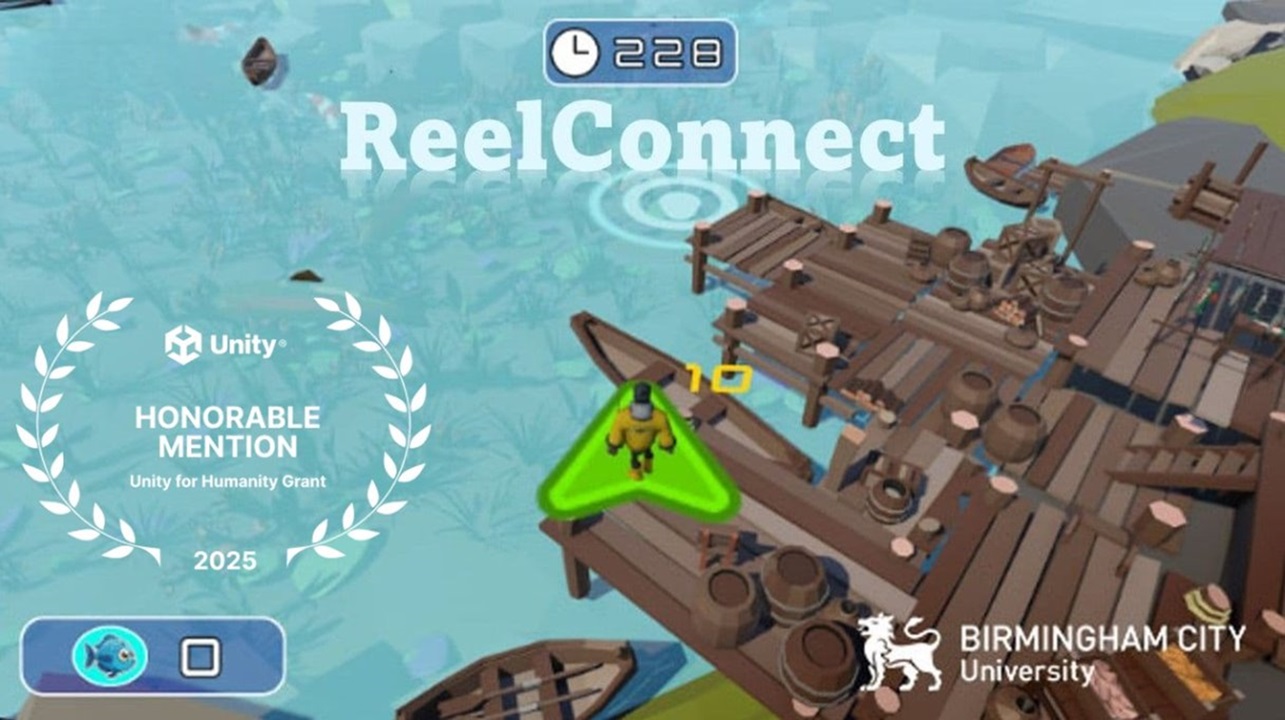
REELConnect A Multi-player game for upper limb rehabilitation
Lead by Dr Xi Guo, Dr Liucheng Guo (CTO and founder for TG0 Ltd., Dr Marianne Hensman, James Bland(student)
Approximately 85% of stroke patients experience upper limb impairment, significantly affecting their daily lives (Tang et al.,2024). Traditional therapy can be repetitive and isolating, leading to poor recovery. Limited by hospital resources, it often lacks accessibility. This project develops a multiplayer rehabilitation game for upper limb exercises at home, making therapy more engaging and accessible. Built with Unity, it enhances stroke rehab through interactive, multiplayer gameplay, making therapy engaging, effective, and fun.
Initiated by Dr. Xi Guo and partnered with TG0 and health experts, the project integrates evidence-based rehabilitation with gamification, dynamic difficulty, and social interaction. Players get real-time feedback and rewards, while multiplayer options allow remote collaboration. Affordable hardware like TG0’s etee controllers ensures accessibility for all users, including those with limited mobility or financial constraints.
This project has received a Unity Humanity Honourable Mention Award for a rehabilitation game. The result has also been published in GitHub as well as MINT conference.
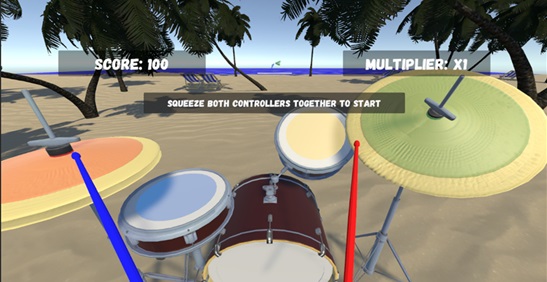
RehabBeat: Virtual Drumming Together for Upper Limb and Cognitive Recovery
Lead by Dr Xi Guo, Dr Liucheng Guo (CTO and founder for TG0 Ltd., Dr Marianne Hensman, Jacob Beason Entwistle(student)
The World Stroke Organization reports around 12 million new strokes worldwide each year (Feigin et al., 2025). More than two-thirds of stroke survivors experience upper-limb impairment. In the UK, stroke already costs £43 billion annually and is expected to rise to £75 billion by 2035.
We aim to redevelop our existing working prototypes using an affordable haptic systems, making them suitable for both clinical and home settings. Three key engagement features will be added: multiplayer gameplay to reduce isolation by connecting survivors with family and friends; adaptive difficulty to support different impairment levels and sustained progress; and mixed reality to improve immersion. Together, these features bring rehabilitation into living rooms, supported by loved ones, through music and play.
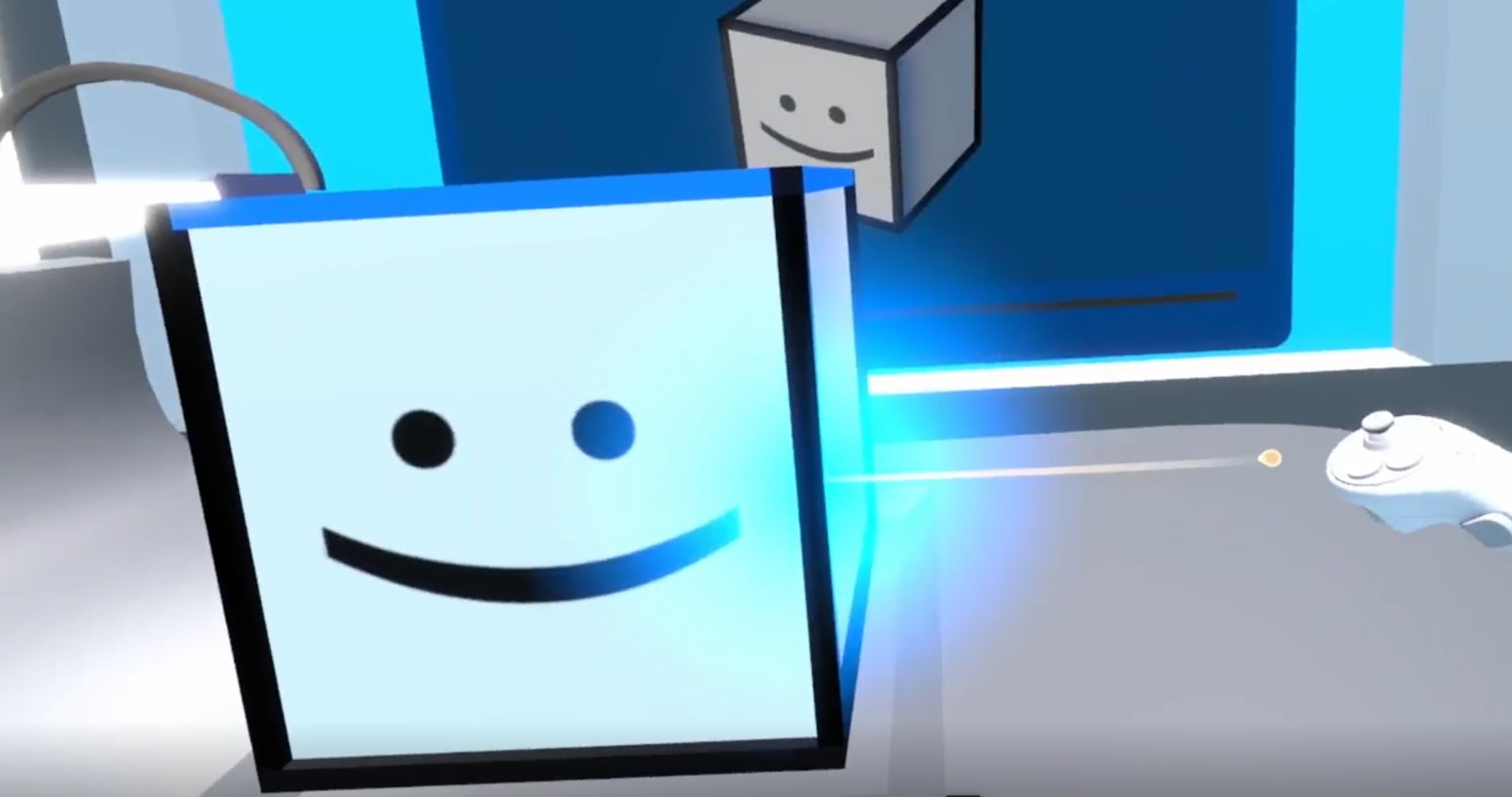
UV-VR: Use Virtual Reality for UV unwrap trainning (Student project)
Andrianna Pavlyshyn(student), Supervised by Dr Xi Guo, Dr Mona Wong,
As increasing numbers of individuals pursue careers in 3D modelling, the lack of interactive resources for learning UV unwrapping has become increasingly evident. This project employed Virtual Reality (VR) to develop an immersive serious game aimed at teaching and enhancing UV unwrapping skills. It further investigated the impact of this intervention on spatial cognition, as measured through a series of Mental Rotation Tests (MRTs).
Although VR’s capacity to simulate three-dimensional environments has been widely utilised in research on spatial cognition, the specific relationship between UV unwrapping and spatial cognitive ability remains largely unexplored. Drawing on a combination of in-game performance data and pre- and post-intervention questionnaires assessing immersion and engagement, the findings indicated only a marginal improvement in MRT completion times. No significant improvement in overall MRT scores was observed, nor was there a clear correlation between MRT performance and prior experience in UV unwrapping.
These results suggest that further research, involving larger sample sizes and more rigorous experimental controls, is required to reach more definitive conclusions regarding the relationship between immersive UV unwrapping training and spatial cognition development.
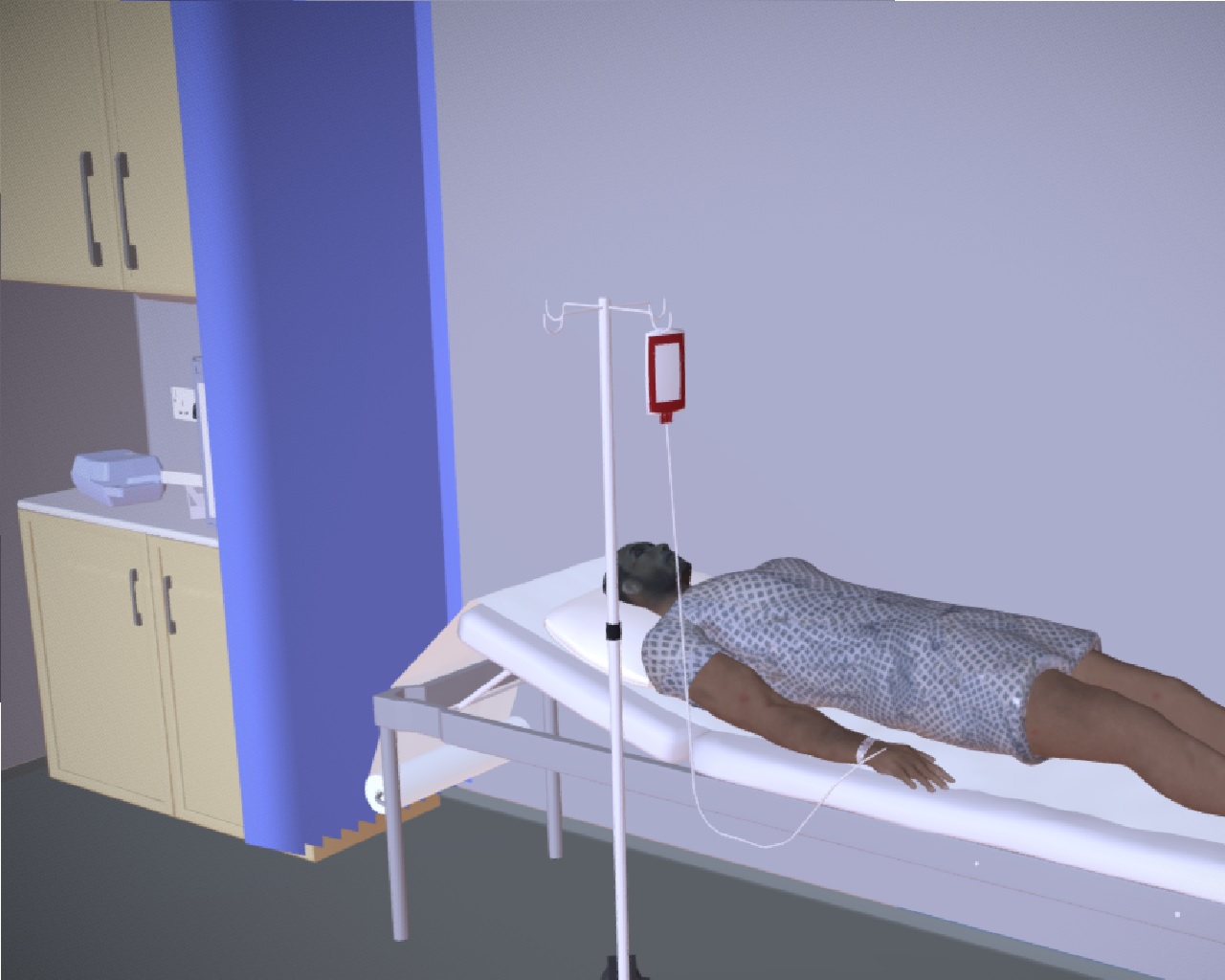
Exploring the Potential of Virtual and Augmented Reality Technologies to Enhance Learning and Teaching
Lead by Dr Xi Guo, Mark Richards and Dion Smith
It can be very challenging in a classroom for lecturers using traditional two-dimensional (2D) methods to explain the form, movement or positioning within a three-dimensional (3D) space. For example, how would you explain how X-ray results change when a body is in a different position? How would you describe the emergency room to a student who has no related experience?
Creating 3D learning materials can provide a solution that will give a better understanding. However, these learning resources normally require special devices to work, which limits both the time and location student can access the resources. Normally the learning materials are not able to fully represent the real-world scenarios, which limits the learning experience and learning outcomes. With learning outputs from the REAL FLC, this project aims to help solve these problems by using recent innovations in mobile AR/VR technology.
By providing an easy to setup web-based application, this project will allow the lecturers and students to access the 3D content at anytime and anywhere. This project also adapts the AR/VR technology in the learning process which allows interaction with the 3D learning/teaching materials in an immersive way. This project also aims to achieve better student engagement and bridge the gap between learning environments and real-world scenarios.
VERA (Virtual Escape Room Anatomy)
Lead by Dr Xi Guo, Dai Rees and Mark Richards
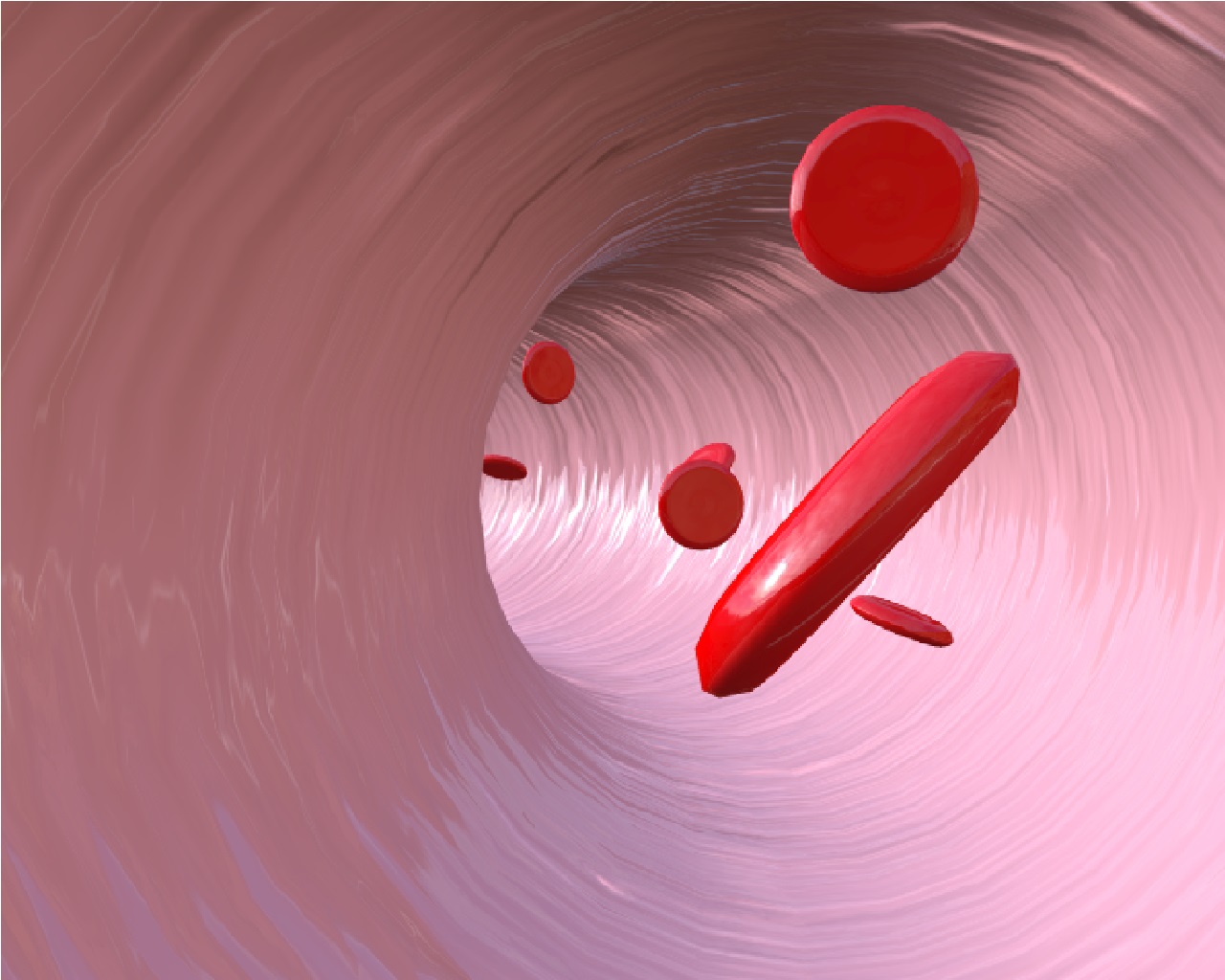
Professional skills and soft skills such as teamwork are equal important for a student in health courses. However, it can be a great challenge to design a learning experience which combines a practise of both professional and soft skills. This project aims to design, implementation and test an Anatomy-based Virtual Escape Room using Mixed Reality technology, which aims to enhance learning experience by inspiring curiosity, engaging with the learning materials and creating a memorable experience. It is collaborated with Radiography department in BCU. Research output is presented in a conference and published on a journal.
LGG (Let’s Go Green)
Lead by Dr Xi Guo, Neil Dickson and Dr Imran Mogra
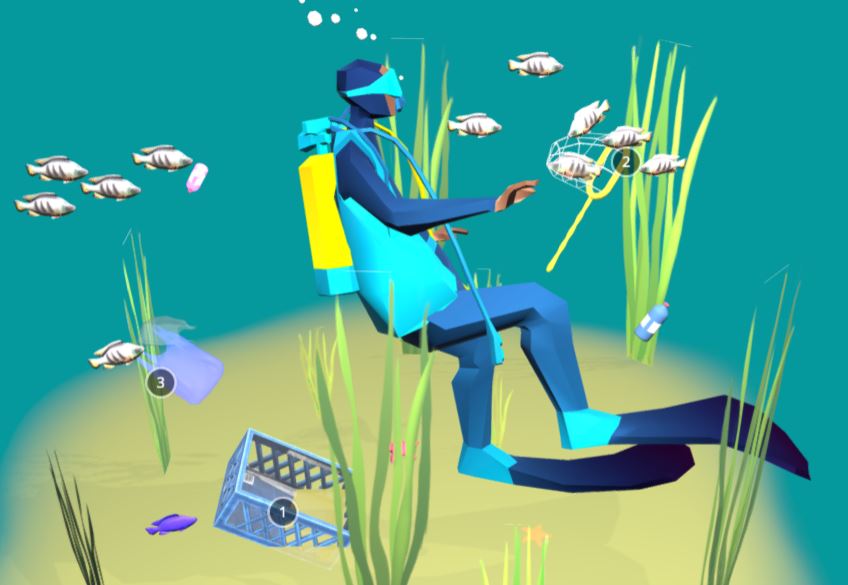
Plastic recycling has been a global issue for many years. Thus, it is important to provide education to today’s youth. However, designing an efficient learning resource for primary children (ages 5-6) is challenging for various reasons, such as their engagement and the efficient delivery of the learning content. Web3D and WebXR are used in many educational applications. This research proposes a system that supports the combined use of Web3D and WebXR technologies to include elements of both Virtual Reality (VR) and Augmented Reality (AR) interactions to raise awareness about plastic recycling.
It appeals to a generation of students where many have access to mobile technologies, as it facilitates both communication and innovation. The mobile device also makes immersive technologies more approachable and scalable. However, there remain questions about how to deliver immersive learning resources to a community with young children to help them learn. When introducing new ways to interact using VR and AR, are young children be able to use it? Will they engage with it? This project is going to explore from the design, implementation and the results of using mobile immersive technology in primary schools to teach about plastic recycling.
Immersive Midwifery Training
Lead by Dr Xi Guo, Dr Alison Edwards and Dr Carlo Harvey
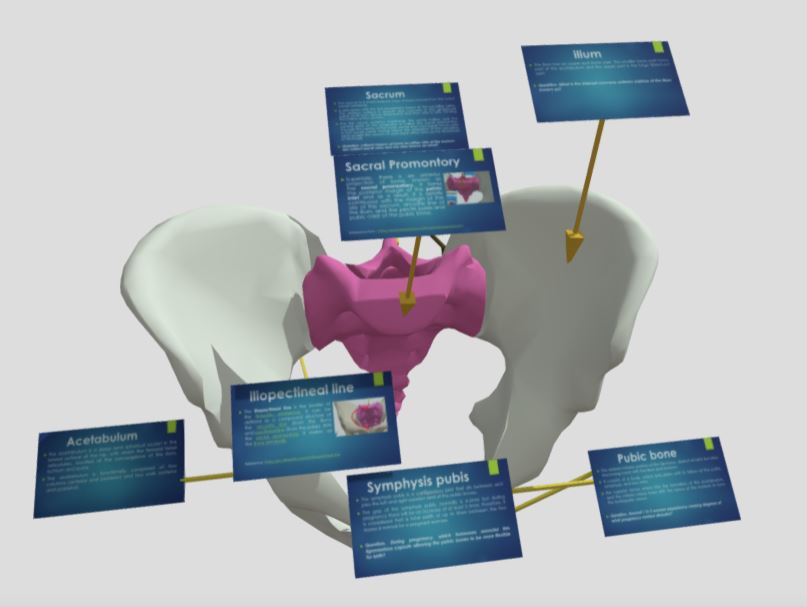
It has been challenging topic for Midwifery students, especially the first-year student, to visualise the scenario in the real practise. The research team proposes an easy to setup web-based application that allow the lecturers and students to access the 3D learning content at anytime and anywhere. By adapting the immersive simulation technology in the teaching/learning process this project aims to enhance the learning experience and hopefully helps the students to achieve a better learning outcome. The project also aim to research how immersive human avatar is used on healthcare training. It is collaborated with School of Nursing and Midwifery in BCU. It has been tested on some Midwifery student in May.
eXtended BCU (eXBCU)
Lead by Zuby Ahmed
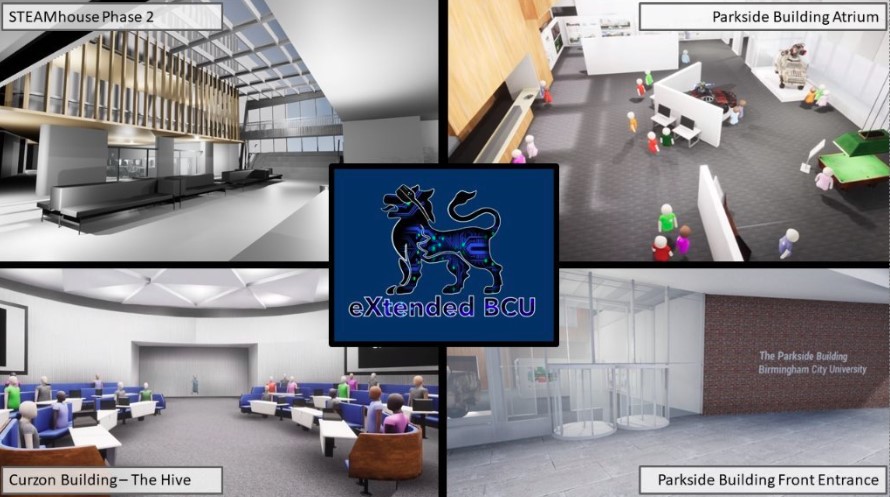
eXtended BCU (eXBCU), is an open and accessible digital platform, providing an innovative, creative, and transformative technological solution to online teaching and learning for educators and students. The project was initially developed as an employability initiative to provide students work experience on developing a digital product, in a response to universities’ increased need to utilise Augmented Reality (AR)/ Virtual Reality (VR) to develop more creative and interactive campus walkthroughs, to support Open Days and student recruitment.
This project contributed a case study of how to integrate pedagogy into gamification to support the design of an online multi-user digital space based on physical BCU campuses using game technology. As the project developed, Experiential Learning theory was used to understand how a gamified multiplayer interactive online teaching and learning platform could be developed, whilst also allowing the platform to showcase work, create virtual tours, then learn from these to develop the provision of course related content.